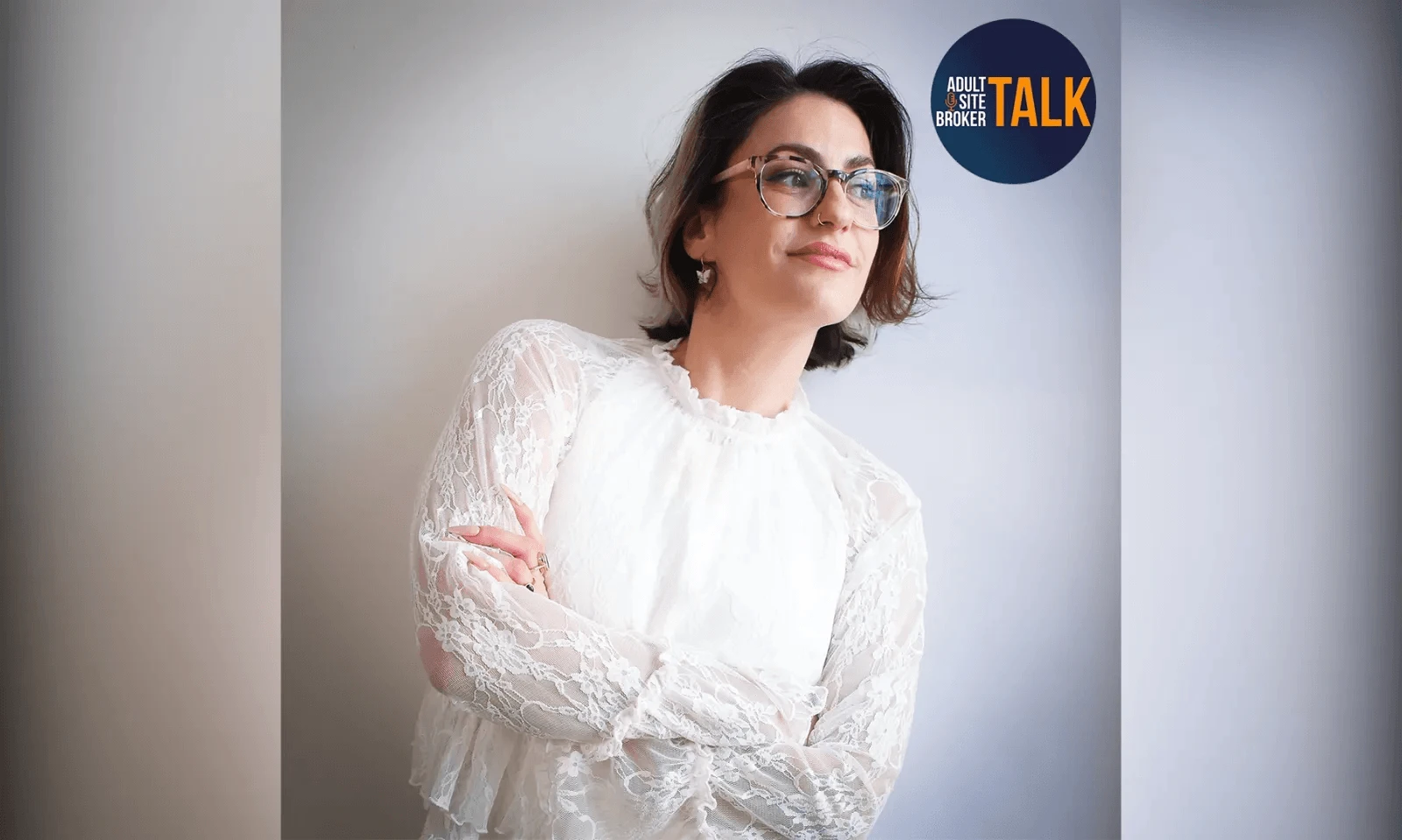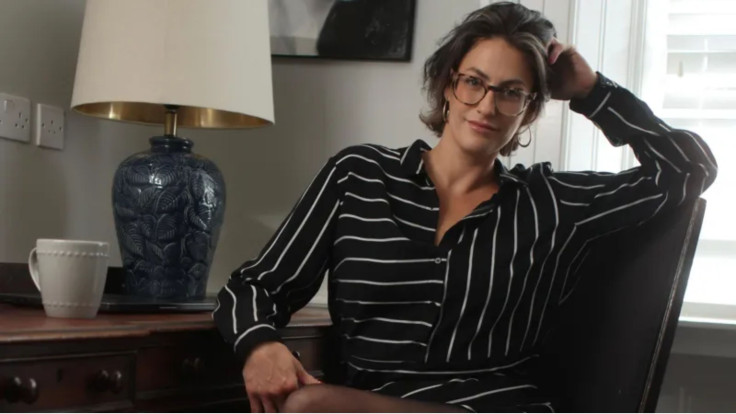

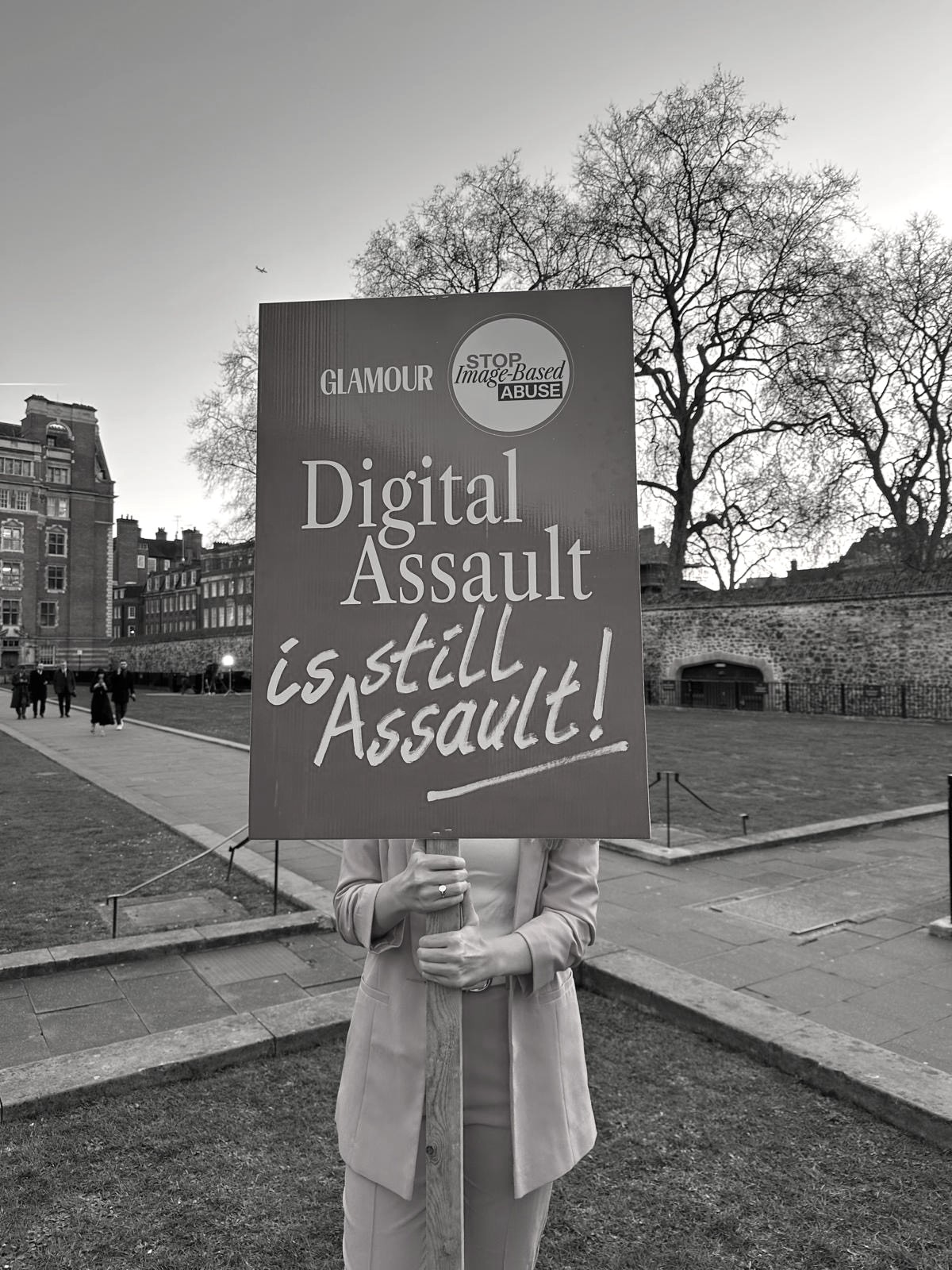
On day Ten of our ‘Sixteen Activists or Organisations Around the Globe Fighting to End Digital Violence Against all Women and Girls‘ campaign, Jodie Campaigns describes how she transformed her deepfake abuse into a powerful feminist movement, driving legal reform and global awareness in the fight against digital violence.
“Like many campaigners,” Jodie explains frankly, “my activism started from a deeply personal experience.” Discovering digitally altered intimate images and videos of herself online was deeply traumatising. Her sense of safety and ownership over her body collapsed “in a single moment.” Moments like these are ubiquitous and unprecedented in scale, due to the global and borderless depth of the internet. However, this moment of pain also sparked a chain of events that established Jodie as a leading voice in the fight against digital violence and deepfake pornography. In this sense, it’s worth remembering that feminist movements are always born from the violent consequences of patriarchal attitudes and structures.
After discovering her best friend had stolen her social-media photos and asked strangers online to deepfake them, she told me she felt exposed, ashamed, and terrified. But as the shock began to settle, she realised her experience wasn’t an isolated one – it was part of a global crisis affecting millions of women and girls, many with far fewer resources or support than she had. That moment of understanding reshaped everything for her. Instead of being consumed by the trauma, she felt galvanised. She wanted to transform her experience into something constructive and ensure that other women wouldn’t have to endure the same silence, disbelief, or isolation she had faced.
Jodie’s campaigning has helped push the UK government toward criminalising the creation of non-consensual deepfake sexual images, closing a major legal gap that previously left survivors with little protection. By sharing her story publicly and working with other organisations and activists like #NotYourPorn, EVAW and GLAMOUR, she helped bring deepfake and image-based abuse into mainstream awareness, showing that it affects ordinary women, not just celebrities. Her advocacy also pushed policymakers to consider survivor-centred reforms beyond criminal law including better support services and faster content takedowns. Her petition on change.org to establish stronger criminal and civil laws for image-based abuse, received 72,223 signatures.
In this interview, Jodie describes the healing yet frightening nature of campaigning on personal trauma; barriers within stigma, political delay and platform inaction; her activism, political impact and coalition building; healing; the slow nature of progress; necessary intersectional approaches; platform accountability and hope for change.
What has the experience of campaigning in the digital sexual violence space been like? Have you come across any barriers?
Campaigning in this space has been empowering and overwhelming in equal measure. The biggest barrier has been getting people to treat this abuse as real and serious. Too often, synthetic intimate image abuse is dismissed as a joke rather than an act of sexual violence.
Another barrier is political delay. Even after campaigners, Glamour UK, Professor Clare McGlynn, Not Your Porn and EVAW fought for deepfake abuse to be recognised in law earlier this year, the legislation still has not been enacted. Survivors have been forced to wait while their abuse continues, and the slow pace of movement is demonstrative of the lack of care about this issue.
The third barrier comes from the platforms themselves. While some are open to conversation, others still hide behind vague statements about safety while doing very little to prevent harm, and in many cases profiting from it via ads and clicks.
Despite all of this, the collective strength of survivors and advocates keeps me going. There is so much power in knowing we are not alone.
Could you describe the initiatives you have been involved with to end digital violence against women and girls?
I have worked on several initiatives aimed at securing better protections for women and girls. I have been part of the national campaign calling for deepfake intimate image abuse to be made a standalone criminal offence, working alongside Glamour UK, EVAW, Not Your Porn, and Professor Clare McGlynn. I have also spoken at a number of conferences and police events in the UK and US to discuss the scale of the issue and lack of police accountability.
I also regularly speak with journalists to raise awareness of synthetic intimate image abuse, dispel myths, and ensure survivor experiences are heard and understood.
Coalition building has been central to my work because this issue can only be solved through collective action.
How has your work with Jodie Campaigns affected you personally, and what kind of political impact has it had?
On a personal level, campaigning has been both healing and frightening. Speaking publicly about something so intimate demands a level of vulnerability that is difficult to describe, but it also restored my sense of agency. It transformed an experience that was meant to silence me into something that gave me purpose.
Politically, the impact has been meaningful, and I’m really proud of that. Survivor voices helped bring deepfake pornography onto the national agenda and into formal legislation. Our work has shaped parliamentary debates, informed cross-party briefings and contributed to discussions within government about how to respond to non-consensual intimate image abuse. The fact that policymakers now actively seek out survivor perspectives shows that the narrative is shifting.
Is there increasing awareness of and action against the harms of deepfake porn?
Awareness is increasing. Media coverage, survivor testimony and campaigns led by organisations like EVAW and Glamour UK have made it clear that deepfake pornography is not entertainment but sexual violence. However, action is still far behind the scale of the problem. The law recognising deepfake abuse has still not been enacted. Platforms remain slow and inconsistent, often treating the issue as a copyright inconvenience rather than a violation of human rights. There is progress, but it is nowhere near enough.
What needs to change on a policy, platform and societal level to address digital sexual violence?
There needs to be immediate clarity and implementation at a policy level. Legislation must actually come into force and not sit on the shelf while abuse continues to rise. Any new laws must reflect the full range of experiences that survivors face, and that means taking an approach that is genuinely intersectional. Too often, the voices of sex workers, migrant women, Black and minoritised women, LGBTQ+ communities, disabled women and those at the sharpest edge of online misogyny are left out of the conversation. If the people most affected are not included, the solutions will never work.
Platforms need to build safety into their products from the start rather than relying on slow and unreliable reporting systems. They need transparent processes, rapid removals, proper age and identity verification, and independent oversight. And as a society, we have to stop treating digital sexual violence as something separate or less serious than physical forms of abuse. The trauma is real, the consequences are real, and the responsibility sits with all of us to demand better from the systems that claim to protect us.
What are your hopes for ending digital violence towards women and girls, and what part will Jodie Campaigns continue to play?
My hope is that we reach a point where this work is no longer needed, where women and girls can exist both online and offline without being targeted, threatened, or dehumanised. That future has to be intersectional. It has to centre the experiences of those who are disproportionately harmed but too often excluded from the room – Black and minoritised women, migrant women, LGBTQ+ survivors, disabled women, sex workers, and anyone who sits at overlapping points of discrimination. If we build systems that protect the most marginalised, then we build systems that protect everyone.
Jodie Campaigns will continue pushing for that future by keeping survivor voices at the heart of every conversation, challenging governments to turn promises into action, and demanding that tech companies take responsibility for the tools they’ve built. The hope is that one day, the emotional energy, time, and solidarity that survivors and activists pour into fighting this abuse can finally be redirected to something joyful – something that builds, rather than repairs. The goal is not only to end digital violence, but to ensure that the generations who come after us never have to fight these battles in the first place.
My hope is that we reach a point where this work is no longer needed… That future has to be intersectional… {centring} those who are disproportionately harmed but too often excluded – Black and minoritised women, migrant women, LGBTQ+ survivors, disabled women, sex workers… If we build systems that protect the most marginalised, then we build systems that protect everyone.
Jodie Campaigns will continue pushing for that future by keeping survivor voices at the heart of every conversation, challenging governments to turn promises into action, and demanding that tech companies take responsibility for the tools they’ve built.