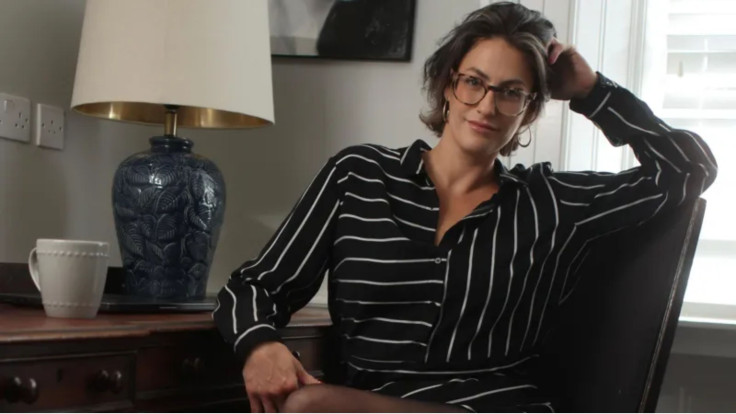

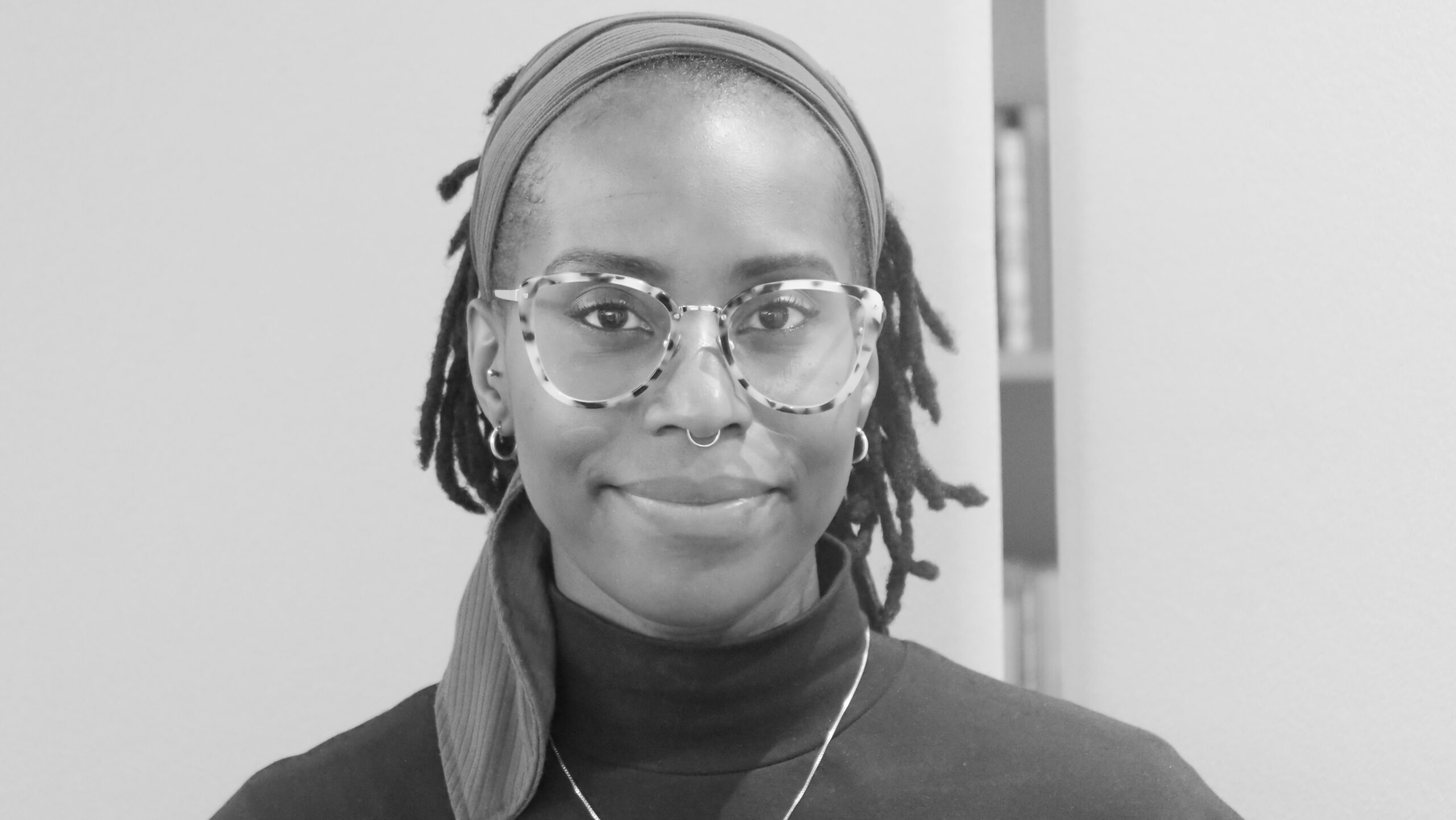
On day fifteen of our ‘Sixteen Activists or Organisations Around the Globe Fighting to End Digital Violence Against all Women and Girls‘ campaign, Tèmítópé Lasade-Anderson highlights how Black feminism shapes Glitch’s bold strategy, why tackling racialised digital violence is urgent, Glitch’s approach to AI literacy and the broader structural forces that reproduce harm online.
Tèmítópé Lasade-Anderson is the Executive Director of Glitch. She is a Nigerian–British–Canadian writer, PhD researcher and digital rights leader whose work sits at the intersection of Black feminist inquiry, technology and online culture. She has been working at Glitch since August 2025, where she leads efforts to ensure that internet technologies and information ecosystems do not reproduce harms against Black women and other marginalised communities. Through research, policy advocacy and campaigning, Glitch tackles tech-facilitated gender-based violence, algorithmic discrimination, platform governance and other digital harms shaped by race and gender injustice. Glitch also works with allied movements to address technology’s influence across democracy, climate justice and migration.
Before taking on this leadership role, Tèmítópé transitioned back into the digital rights and tech policy sector after a period focused on her PhD and freelance consultancy work. Having consulted with Glitch since 2020, she stepped into the Deputy Director position in late August 2025, following a stint in global philanthropy. Her promotion to Executive Director in January 2025 marked a significant career moment. “It was a big decision for me to accept,” she explains, “and not one I took lightly, but I think I have a unique position straddling both the academic/research field and the tech policy and digital rights fields.” This dual positioning informs the clarity and depth she brings to Glitch.
Alongside this work, Tèmítópé is completing an AHRC/LAHP-funded PhD at King’s College London, where her research explores Black women’s digital intimacy through a Black feminist, transdisciplinary framework. Tèmítópé is a 2025 Technoskepticism Affiliate at the DISCO Network, a member of the Centre of Digital Policy at University College Dublin and an Advisory Board member for FORSEE, a European AI initiative. She has held research fellowships at the Centre of Advanced Internet Studies (2024) and served as the inaugural research curator-in-residence at FACT (2023). Her writing appears in journals such as Feminist Media Studies, Television & New Media and the Journal of Global Black Thought, as well as in independent publications like DADDY Magazine and The Canary. Before academia, Tèmítópé held roles across digital rights and tech policy, including at Digital Action, Global Citizen Foundation, Mozilla Foundation and Whose Knowledge?
In this interview Tèmítópé talks about how her Black feminist lens shapes Glitch’s strategy, the realities of leading a Black-led digital rights charity and advocating for anti-carceral approaches within the VAWG sector. She discusses Glitch’s work addressing racialised digital violence, the intersections between misogynoir, algorithmic discrimination and platform governance and the broader structural forces that reproduce harm online. Tèmítópé also reflects on the organisation’s upcoming AI literacy programme launch and the policy, platform and societal changes required to build an internet that is genuinely safe, equitable and just for Black women and other marginalised communities.
How does your work as Executive Director at Glitch inform your PhD research background?
My academic background informs Glitch strategy in a number of ways. I have a solid theoretical background in Black feminist and decolonial thought, which I apply to both advocacy and organisational strategy. I aim to ensure we’re always building on existing academic research, like we did with our Misogynoir Tracking Tool and Digital Misogynoir Taxonomy, and I try to work as a connector between the academic work and charity work happening in the field.
What has the experience been like for you leading a non-profit in the digital rights space, especially one rooted in Black feminist values? Have you encountered any particular barriers?
Thankfully I think the sector is accustomed to (not necessarily accepting or inclusive of!) Black-led charities and collectives. We have a great ecosystem of co-conspirators in the UK and EU who have similar radical and progressive beliefs – Equinox, Weaving Liberation, Hersana, EVAW, Amnesty Tech, ESWA and CDT Europe to name just a few, so that’s wonderful. We tend to have the most barriers when it comes to thinking about anti-carceral approaches to the impact of tech-facilitated gender-based violence, as abolitionist thinking is the norm in this VAWG sector, speaking broadly. In general, though, the sector understands our organisational positioning and approach.
How does Glitch’s advocacy work specifically address digital violence targeting Black women and girls, and in what ways do you see this violence intersecting with algorithmic discrimination and failures in platform governance?
We take a pretty specific approach to digital violence, and discrimination, thinking of harm as a breach of rights. Individuals face digital violence when their rights are wrongfully thwarted. However, we also consider that collectives face digital violence – when there are breaches of rights towards a collective/group of people (i.e. people racialised as Black).
Our core issue areas within TFGBV are online abuse – specifically focusing on ensuring UK regulatory and legislative approaches name and address misogynoir and racialised abuse online and the disproportionate and sexualised nature Black women experience of intimate image abuse/non-consensual image abuse. We’re also increasingly concerned about the relationship of anti-immigrant and anti-Black alt-right discourses online and its causal relationship to offline violence.
These issues reflect general anti-Blackness in society, and we see this replicated in the rolling back of 2020-era Big Tech platform safety pledges. Black people are historically and presently discriminated against by states and institutions – and this is also the case for technology development. Our Black feminist approach to tech policy advocacy addresses how race and gender are created via historical, cultural, social, and economical processes, of which platforms and AI are developed from and also shape. It also highlights how the information communications ecosystem replicates what Black feminists call negative controlling images and discourses about Black life, which furthers digital misogynoir, algorithmic discrimination, and other individual and collective harms for Black women and gender-expansive people. Lastly, our advocacy critiques and challenges technology regulators and legislation by seeing how race, gender, class, power, sexuality, and other social constructs combine in a matrix of domination to create conditions of inequality or oppression.
Image credit: Glitch asset
Glitch is preparing to relaunch its programmes in 2026. What kind of impact do you hope these new offerings will have on the communities you serve?
Personally, I really want to ensure Glitch is embedded more with by-and-for, frontline organisations for our programmes work. The programme workshops will focus on AI literacy, specifically knowing exactly what “AI” is (a focus on automated systems in public service provision), and what people’s redress options are currently. We hope the impact will be to ensure people can gain transparency to where automated decision-making is being used without their knowledge; improve and gain skills around understanding AI; and ultimately challenge the use of these tools.
Is there currently enough visibility of Black women and girls within research and advocacy spaces focused on technology-facilitated harm?
There are more Black women and Black gender-expansive people in the broad digital rights and tech policy field than when I started this work over a decade ago! Visibility doesn’t equal power, though, and so I think we see a demonstrated challenge to race-neutral digital policy – as it relates to migrant rights, refugee rights, surveillance and the environment, when more racialised people are shaping this work, and when they are funded to do so.
What needs to change at the policy, platform and societal levels to create an internet that is truly safe and just for Black women and other marginalised communities?
At the policy level – less race-neutral legislation. Syncing up equality and human rights law with digital policy and being specific in the language used in the legislation so it’s clear.
At the platform level – well the above would impact platforms, but I would add no shadowbanning of Palestinians, s**workers and other marginalised groups. Accepting that they are not mere ‘media facilitators,’ or aggregators, as they have brute-forced their way into our leisure time.
What are your hopes for ending digital violence towards women and girls and the part Glitch will continue to play in such a complex task?
I really would love Glitch to become expendable or redundant, in the sense that we wouldn’t need to exist because the issues don’t exist. I’ll just say that I see tech-facilitated violence as an accelerator of existing social justice issues like racism, misogyny, dis/ability discrimination and economic injustice. While ‘the digital’ changes the ways these issues are experienced, it didn’t create these problems. So, until we tackle those issues, digital violence will continue to proliferate.