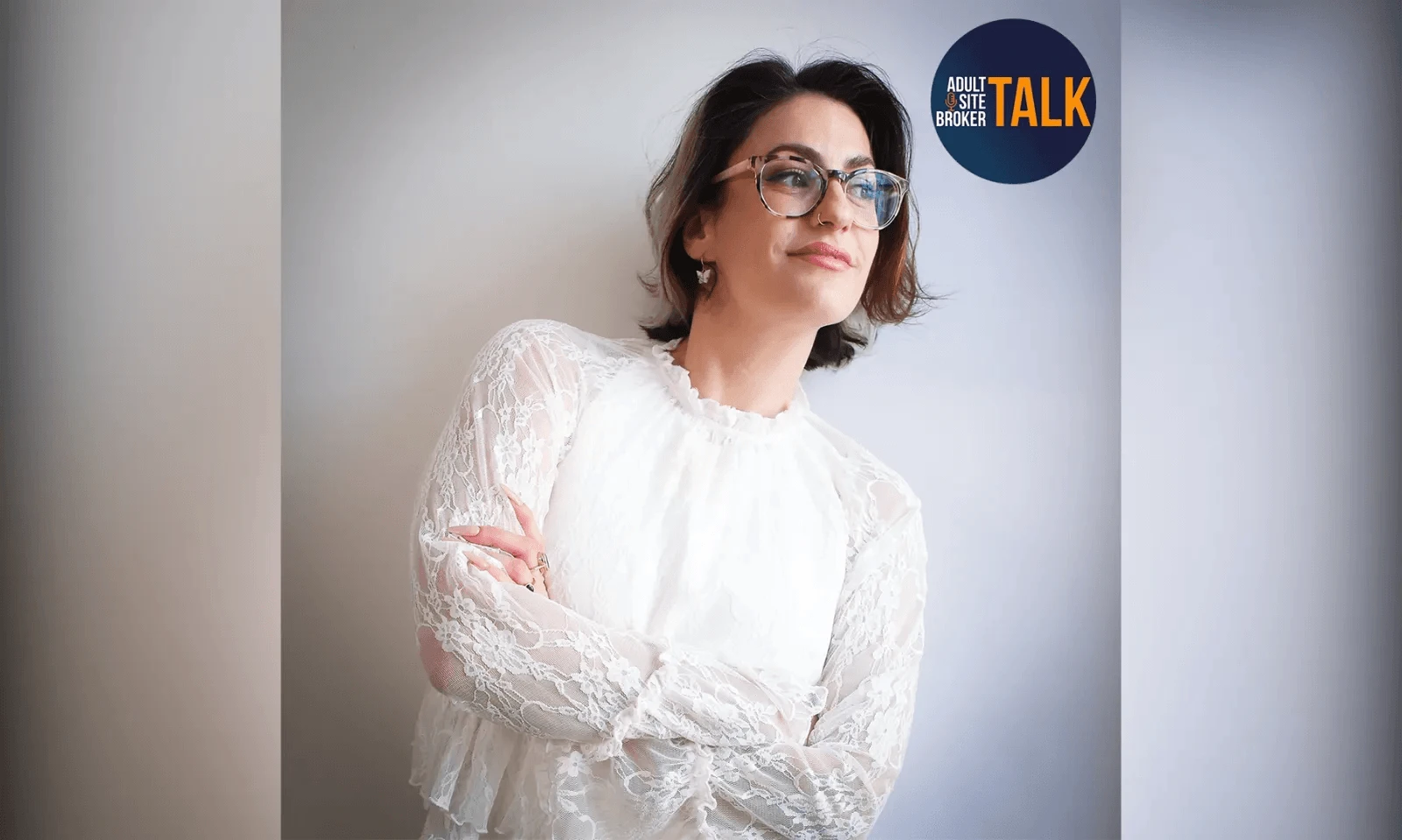

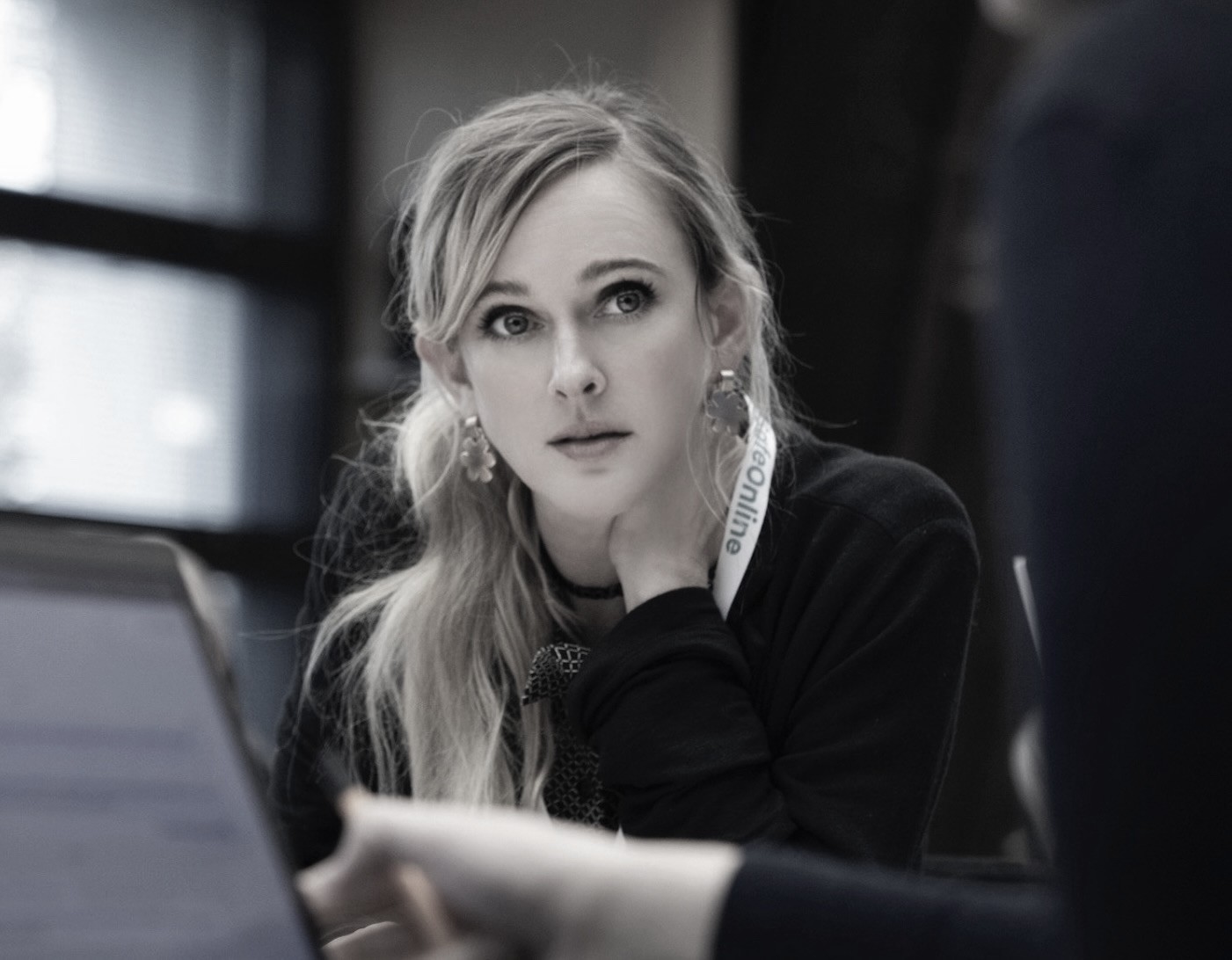
On day five of our ‘Sixteen Activists or Organisations Around the Globe Fighting to End Digital Violence Against all Women and Girls’ campaign, Andrea Powell shares STISA’s cross-border initiative, survivor-centred partnerships and collective action to erase abusive content online and build digital safety at scale.
Andrea Powell is co-founder of Survivors & Tech Solving Image-Based Sexual Abuse (STISA), a global initiative centred on victims and survivors, uniting and empowering hotlines, helplines and other initiatives to combat and remove Image-Based Sexual Abuse (IBSA) online. Andrea, who is based in San Diego, believes survivors of digital violence, in all its forms, deserve “true healing and justice.”
After spending three days with twenty survivors from eight countries at a private summit in 2022, Andrea learned that the number one concern in the “darkest hours of discovering their abuse” was the swift and total erasure of their non-consensual images online. This drove her desire for global change.
When Andrea met her co-founders, Jean-Christophe Le Toquin and Caroline Humer, they quickly discovered a shared commitment to this common goal. She explains it felt like the right time to “tackle the global scale of this vastly growing form of sexual violence together and coordinate a cross-sector response to ensure survivors regardless of age have the ability to request the removal of their abusive content.”
The co-founders draw from a range of expertise: Jean-Christophe is the former President of INHOPE and Director of the Digital Crimes Unit at Microsoft EMEA; Caroline is a leading global expert on trust and safety, as well as missing persons; while Andrea is the co-founding director of the National Center for Victims of Internet Crime and Exploitation (NCVIC), where she supports efforts in image-removal and justice for survivors, and the former director of The Reclaim Coalition. Andrea has also published a book called Believe Me, a social justice memoir about her work with survivors of sex trafficking.
In this interview, Andrea talks to us about the need for global approaches to digital violence, prevention and takedowns through hash databases, how policy differs across borders and a personal story of fighting to remove non-consensual images.
What has the experience of building a global initiative in the digital sexual violence space been like? Have you come across any barriers?
I believe all efforts in eliminating sexual violence, online or offline, must centre around survivors. STISA’s values and mission integrates a survivor centric approach across all 3 of our programs. This means taking the time to listen and learn from survivors who are experts in technology, research, law and policy and advocacy. We are also establishing a connected network of hotlines/helplines to support survivors and empower them with cutting-edge technology tools that enable rapid identification and removal of content.
I am excited to see so many hotlines and helplines and government regulators stepping up to join us in just the past year or so. This includes the eSafety Commissioner of Australia, the Dutch hotline OffLimits, the South Korean (**** confirm given changes), the French hotline Point de Contact and #stopfisha, Portuguese hotline APAV, and soon more.
There are many barriers from non-consistent terminology, to cultural and legal differences as well as adoption of technology. This is why we believe collaboration across industry and sectors is important to overcome some of these barriers as the movement to eliminate digital sexual violence grows.
What support does STISA offer to survivors?
STISA’s approach is to use technology to support helplines and hotlines in removing the abusive content of survivors who contact them by creating what is known as a hash database. Images or content that enters into this database is effectively ‘fingerprinted’ and then put in a digital ‘black box,’ so that when anyone tries to re-upload this content, they can’t. We firmly believe that the best support survivors can get will be delivered by an organisation close to them, that they can trust. We empower the helplines and hotlines with the technology they need, basically a solution that helps them process the reports from the victims and send the takedown requests, and a hash-list that prevents the republication of the intimate content by the platforms. This is all with the consent of the survivors. So, for example a French survivor would not have to fight platforms or websites across multiple countries or even multiple locations of different platforms, as we at STISA protect survivors at scale and across borders.
Why is a global and collaborative approach important for ending digital sexual violence?
Survivors are often from one country, and their abusive non-consensual content is often in many countries across different platforms, websites and forums. So, legislation is very important but not enough. In the United States, we recently passed the Take It Down Act that requires specific platforms to remove nonconsensual abusive content. However, survivors are still left to deal with multiple platforms, often on their own. This is true across most countries.
This is why we need a global response that focuses on the consent of survivors, not the platform user agreements. Furthermore, much of digital sexual violence content is hosted on websites and forums that are intentionally designed to publish illegal and nonconsensual content and thus collectively we must globally act to remove content quickly and prevent the further spread of content to non-compliant bad actors.
How does IBSA differ across borders?
There are two things we have noticed. The first one is around consent. In Europe you have examples like Denmark that makes any image/video the copyright of the person in the image/video including deepfakes. In the United States, the Take It Down Act requires covered platforms to remove abusive non-consensual content in 48 hours, but this does not cover the entire internet. Culture also contextualises and shapes how IBSA is understood, challenged and prevented, and local organisations are on the frontlines of that fight. They hold the trust, the language and the lived experience to reach survivors with compassion and to confront the harmful norms that enable abuse. STISA helps ensure that responses to IBSA are culturally informed, survivor-centred and sustainable – ultimately fostering safer and more respectful digital environments worldwide.
Is there any inspirational work you would like to highlight in a specific country or context that you have come across in your global network?
That is a beautiful question. I’ll share a story that inspired and showed me the deep need for STISA. I was working with a woman who is from a foreign country, and she was living in the U.S. where she was exploited by a man she knew, who then published non-consensual images of her – both real and synthetic – across hundreds of web sites and platforms all over the world. We tried to manage the takedown requests ourselves, but it mostly fell on deaf ears. We reached out to U.S. based hotlines and again found no true help. I was in Paris with my colleague, Jean-Christophe and I asked him what we could do. Within days, our now STISA partner, Point de Contact (heroes!), took her case and they got almost all of her content down. However, one search engine was irresponsive. We had to advocate directly to get their support to remove her content. But what I really felt was so inspiring was that across multiple countries and partners, we succeeded in the removal of her content. This is digital justice. All survivors should have access to this so that they are safe and can heal. This is why STISA is here. We are a global response to IBSA!

Andrea with STISA team members at Paris Peace Forum 2023
What needs to change on a policy, platform and societal level to address digital sexual violence?
I believe we must centre consent at the core of all policies around the creation and publication of content on the Internet. We also must continue to drive home that while the Internet is the ‘marketplace’ for such content, humans are driving the demand for abusive non-consensual content. Alongside policies to ensure content is removed and technology solutions to protect victims, we also need to shift our culture. This is like how fifty years ago, most people thought of domestic violence as a private matter. Survivors often had little recourse. In the United States, a married woman had no federal protection from rape by her husband until 1993. So, we are in the eye of the storm. This is a movement to end digital sexual violence, and we must make consent the norm for all survivors.
What are your hopes for ending digital violence towards women and girls and the part the STISA will continue to play in such a complex task?
I believe that digital violence towards women and girls is not an inevitable byproduct of the online world. We do not have to accept this as the norm. I believe we can make it unacceptable and illegal in all its forms. STISA has the capacity to help because we are uniting survivors, technology and global NGOs and stakeholders together. If the problem is global, so is the solution. That is why we are STISA.